
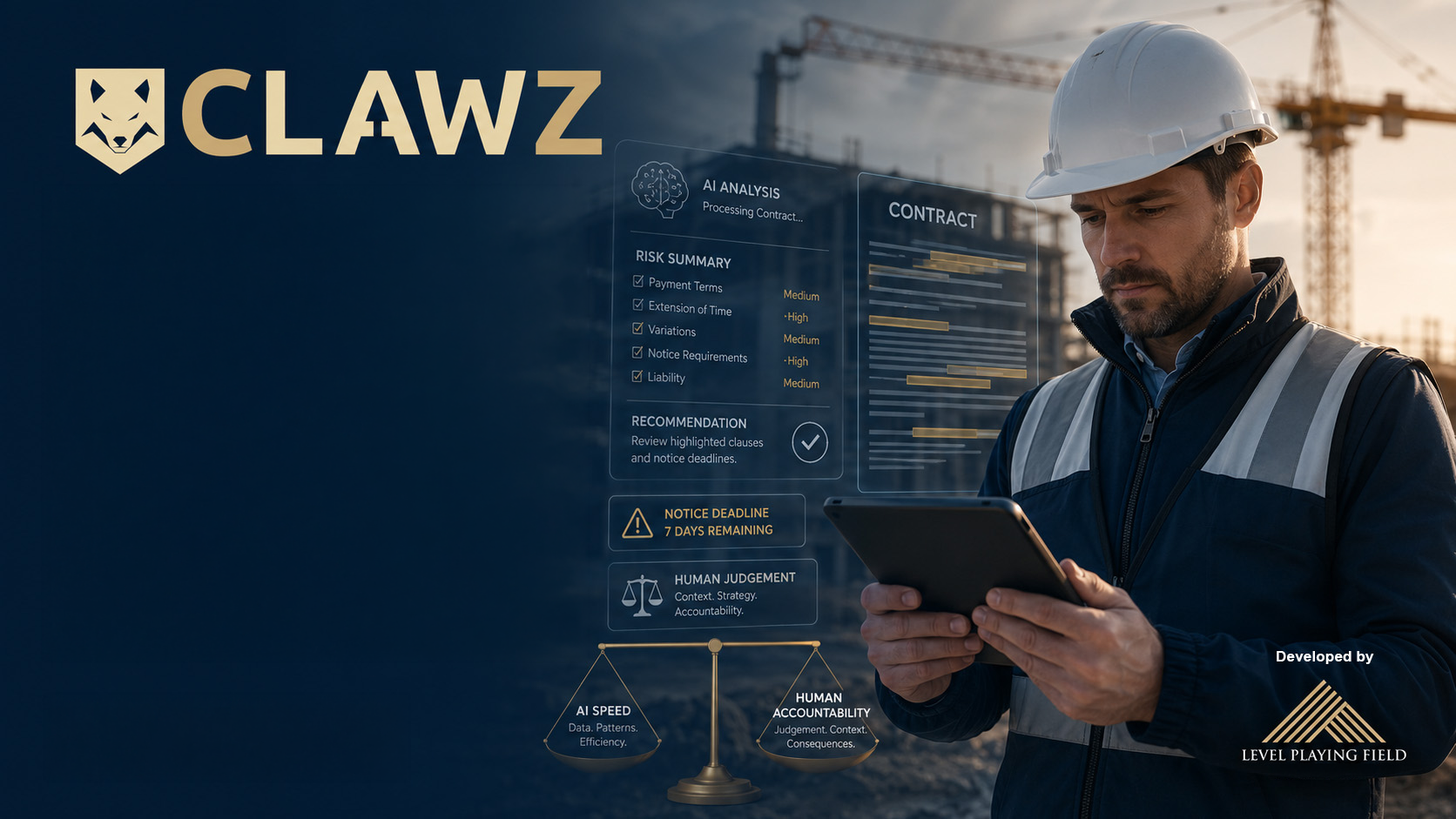
“It ain’t what you don’t know that gets you into trouble. It’s what you know for sure that just ain’t so.”
— Mark Twain
That is the risk sitting inside most construction businesses right now. Not that AI is unreliable, but that it sounds certain even when it isn’t.
Project teams are already using it to summarise contracts, draft correspondence, organise records and flag clauses worth a second look.
That shift is real, it is useful, and it is not going away. The question worth asking is no longer whether contractors should use AI.
The question is what happens the moment its output is treated as the final word on a payment position.
An assumed answer is not the same as a checked position
Upload a head contract into a modern AI tool and the output looks impressive. It identifies payment terms, summarises variation clauses, flags notice requirements, points to retention provisions.
That is a genuinely useful starting point.
But AI only works with what it’s given. It does not know which instruction was issued verbally on site, which email changed the commercial position, or which special condition overrides a clause elsewhere in the contract.
And it does not carry any consequence if it gets that wrong.
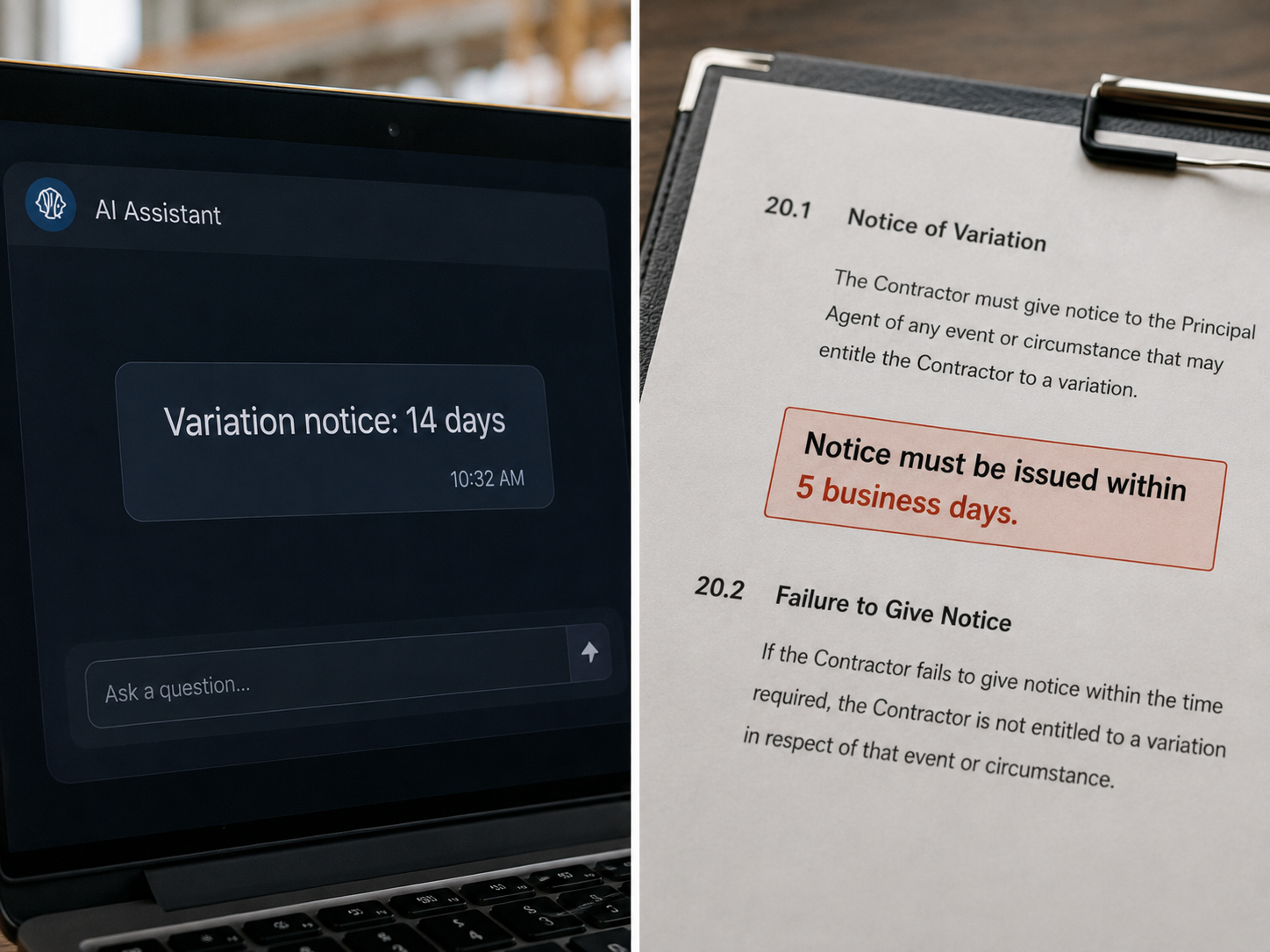
This is not a hypothetical. It is the ordinary shape of the risk: a plausible-sounding answer, sitting one clause away from being wrong.
A delay occurs on site. The team uploads the contract and asks AI which noticeapplies. It identifies a clause, gives a deadline, drafts the notice. It readswell, so the team relies on it and moves on.
Month slater, in a payment dispute, the other side points to a special condition the AI never connected; a different notice period, a different recipient, a shorter timeframe. The notice was late, or incomplete.
Nobody checked it against the actual contract while there was still time to fix it.
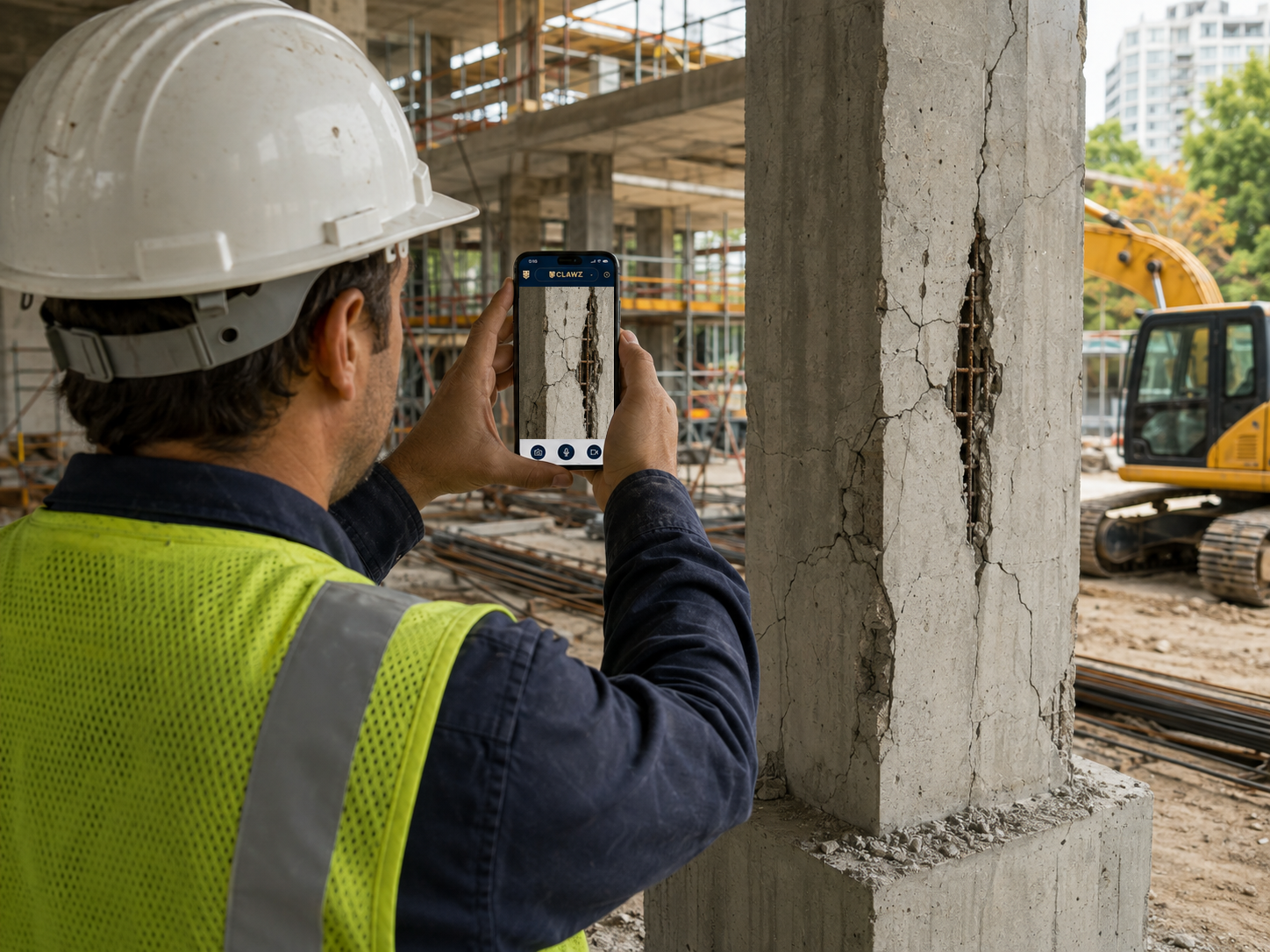
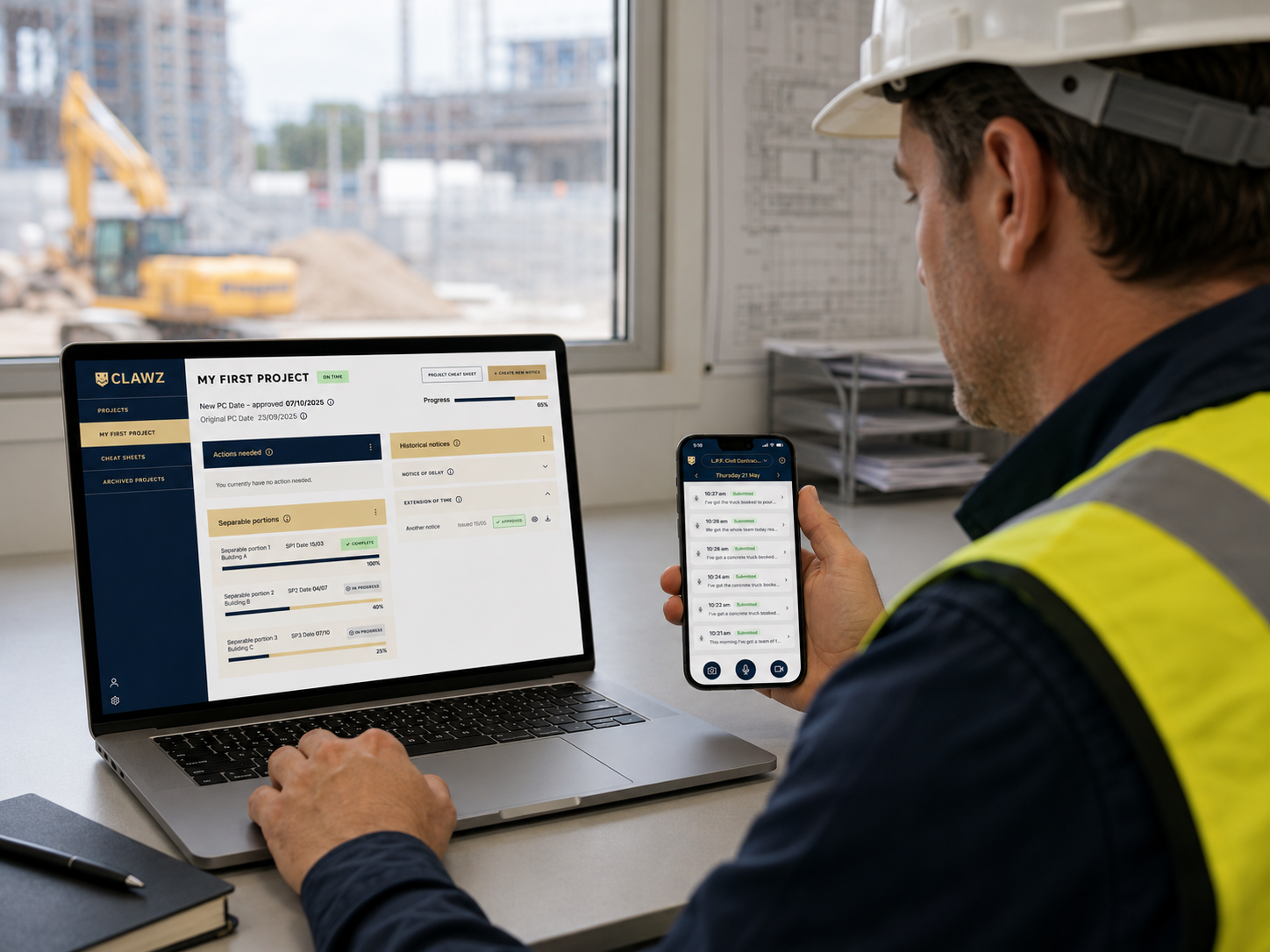
The same delay is logged from site using fast field capture. Voice-to-text, on the spot, while the detail is still fresh. The lawyer-verified cheat sheet for that project identifies the correct notice provision. The guided notice workflow sets out the form, the recipient and the deadline, and tracks it through to issue. The live dashboard shows management the deadline before it passes, not after.
Samedelay. The difference is whether the notice was checked against your contract,by a system built to catch the special condition, not assumed from a generalanswer.
To be clear: that doesn’t change who carries the outcome. It never sits with the tool, and it doesn’t transfer to CLAWZ either, the contractor owns the project and the position it ends up in.
What changes is whether that outcome is the result of a missed step, or a process that was actually followed.
CLAWZ was developed by Level Playing Field Lawyers to connect the contract with what actually happens on a live project. It is nota document store, and it is not a chatbot producing a summary.
Project teams get practical guidance on the clauses that affect their work, without needing to interpret the entire contract themselves.
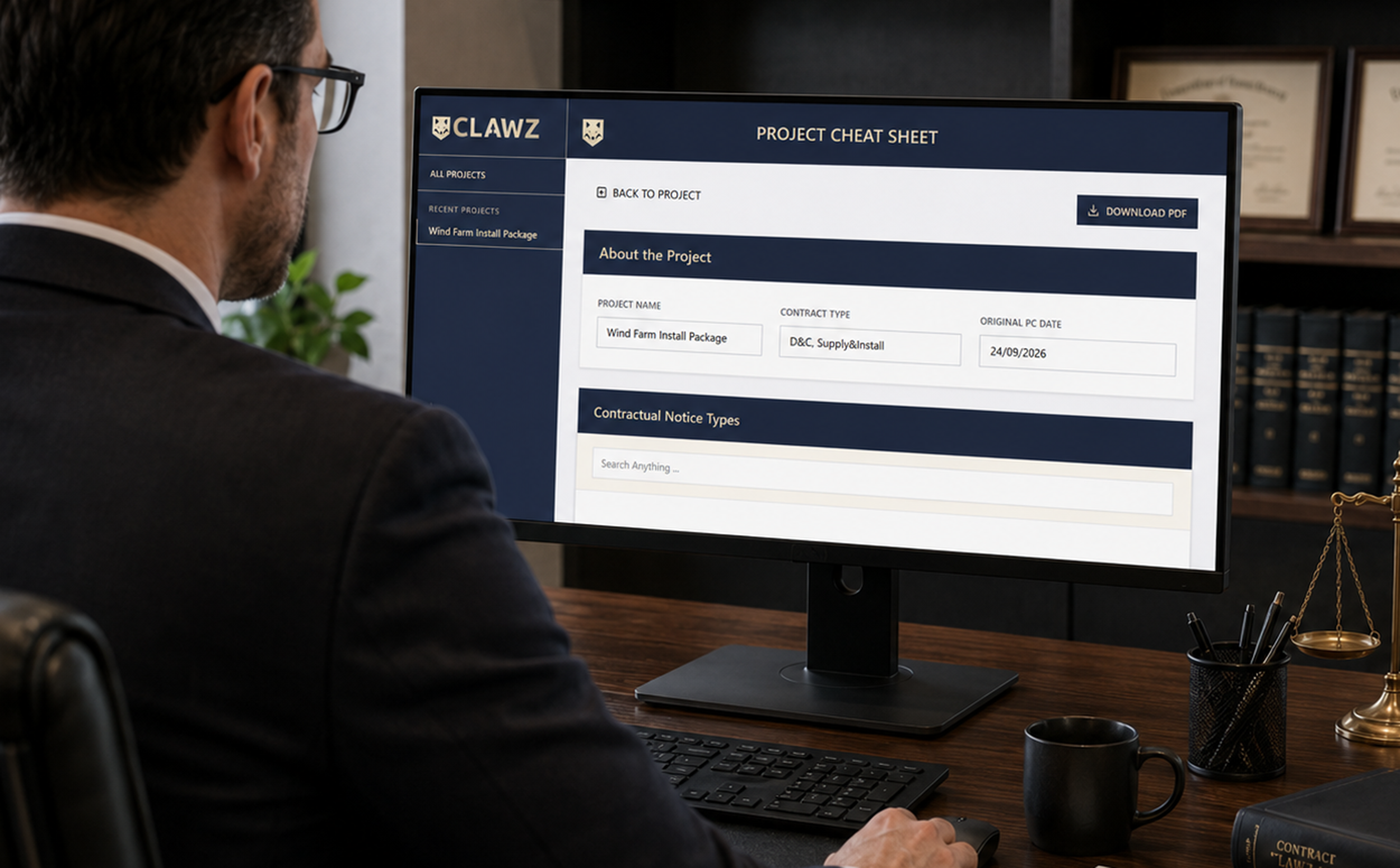
Contract requirements become practical steps: what needs to be issued, when, to whom, and with what supporting information.

Site teams capture photos, video and voice-to-text notes while the event is still fresh, not reconstructed from memory weeks later.
Management sees delays, variations, notices, deadlines and contract position while the project is still live, not after the dispute starts.
One contractor recovered more than $300,000 after putting a clearer contract process in place. That is not a promise every project produces the same result. It shows the commercial value of stronger records, timely notices and a controlled process when payment position comes under pressure.
Use it to draft a first pass, organise information, or raise questions worth checking. That is where it earns its place.
But when the issue touches payment rights, notice obligations or dispute position, the standard has to be higher than a confident-sounding answer.
The contractors pulling ahead won’t reject AI, and they won’t trust it blindly either. They'll treat its answers as a starting point, not a checked position, and pair them with a system built to verify before anything is acted on.